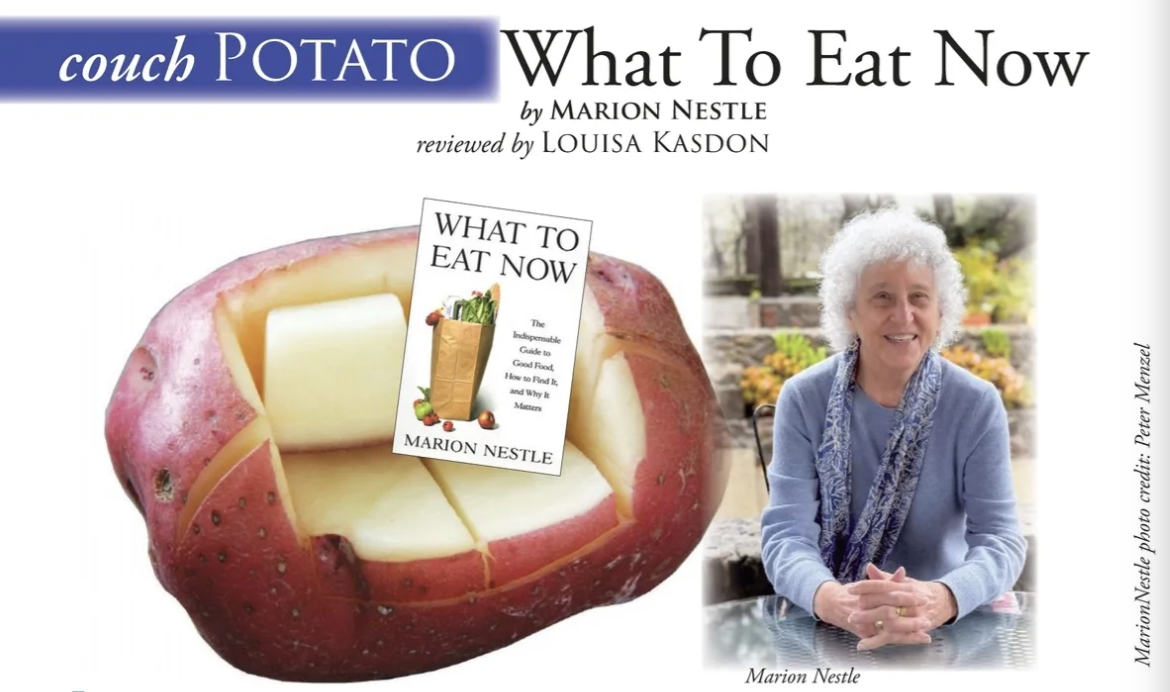
I’ll admit it. I have a serious case of hero worship for Marion Nestle. To call her an icon of nutrition and food politics is an understatement. To call her the most respected nutritionist in America is probably an understatement, too. As someone who has been writing about all things food for several decades, my longtime friend and colleague Marion Nestle is always my first call when I have a question. Are seed oils really a problem? Are daily eggs for breakfast safe? Is drinking cider vinegar a useful thing? Can you explain the difference between dietary cholesterol and the kind of cholesterol that gives you heart attacks? Is red wine really a miracle drug? And remarkably, she returns my calls and my emails and answers my questions.
Dr. Marion Nestle is the Paulette Goddard Professor emerita and long-time chair of NYU’s Department of Nutrition, Food Studies, and Public Health. Author of numerous books and articles and the daily writer of the indispensable blog foodpolitics.com, she has received almost every conceivable award in the food and policy world, including a James Beard Award and numerous honorary doctorates–in addition to the one she earned from the University of California in Molecular Biology. For my two cents, when Marion Nestle weighs in, you can take it to the bank.
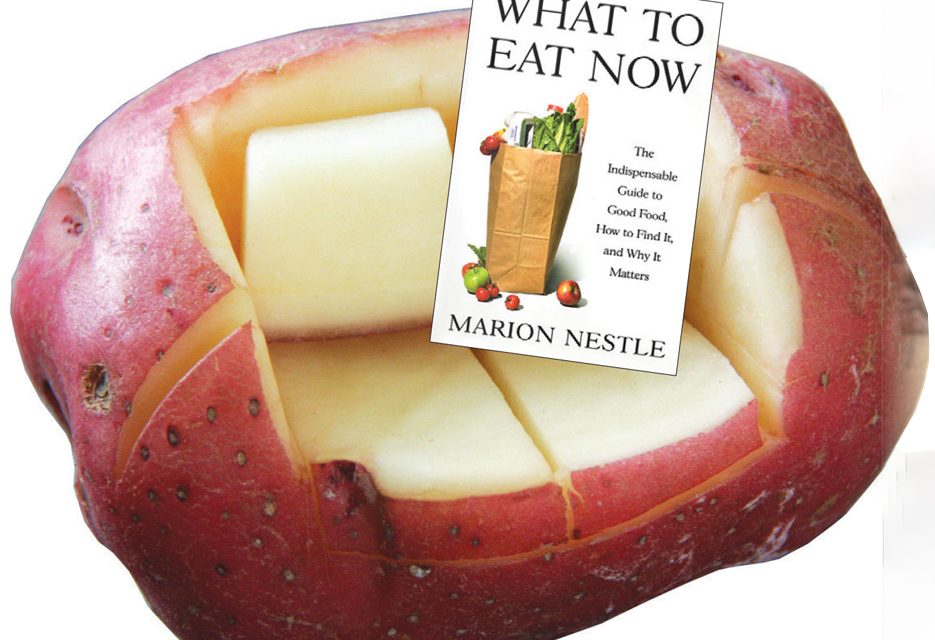
When I saw that she had reissued her landmark book, What to Eat Now, I wondered why. The first book, published 20 years ago, was a bible for me and others who wanted guidance on how to navigate the avalanche of often contradictory information on food and nutrition. Well, I figured, even a bible might need a dust-off. New science, new aggressive marketing claims, new food sources. For example, when the book first came out, items like plant-based Impossible™ Burgers and lab-grown meats were not yet on the grocery shelves. What I didn’t expect was essentially a completely new book–nary a page untouched–the definitive field guide to eating in America updated for the current moment.
The book is meant to be an informed buyer’s guide to the over 30,000 products that are on the shelves at a typical American grocery store. How do we make smart choices for ourselves, our families, and our community? How do we distinguish between the competing health claims on the packages or make our way through the advertising blitzes to find the truth of what’s in the food we eat? The best part is that Nestle is a wonderful, accessible writer. This is not a scary, preachy tome. Instead, it’s chock full of information that you can digest, remember, and use every time you go to the grocery store. As her organizing principle, Nestle takes the reader on a supermarket tour, starting with the beverage aisles, progressing on to produce, to the meat section, the fish counter (the most confusing of all!), a stroll past the dairy and egg refrigerators, and on to the center aisles of the supermarket, their shelves jammed with a bounty of lightly-processed and ultra-processed products such as breakfast cereals, snack foods, and even formula and pet food. The question she focuses on is most plainly stated: What claims can you believe?
The Indispensable Guide to Good Food, How to Find it, and Why it Matters
I recognize that if you read this magazine, you care mightily about the source of your food. You shop at farmers’ markets; you might can, freeze, or grow your own food. But still, we all likely need to engage with Big Food on occasion—whether it’s figuring out how to navigate the cereal aisle, understanding kombucha, or figuring out what to do when you are standing confused in front of the frozen foods section.
Lactose-free? Organic? Ultra-pasteurized? Zero percent, two percent, or whole milk? Not to mention the dairy-free milks–how do you decide what’s right for you, and how do you discern hype from health? According to Nestle, we’ve been educated by the industry and the government to consume far more dairy than we need, expecting that our daily dairy habits will make our children stronger and taller, and that as we age, the calcium in milk will protect our bones. She’s dismissive of these dairy industry claims and FDA claims. And, on the animal welfare beat, what is the impact of factory farming on the over nine-million dairy cows in America that in 2022 produced 225 billion pounds of milk each year, a doubling of the amount of milk dairy cows produced in the ’70s.
I asked Marion Nestle how she hopes conscious shoppers and eaters, like the readers of edible Magazines, should use What to Eat Now. She writes, “What to Eat Now may sound like it’s a diet book, but it is not. I wrote it as a basis for how to think about food system issues, from those affecting how we produce food to the factors influencing how and why we make food choices. I used supermarkets as an organizing device for talking about every issue that comes up as you wander through those aisles. I could not believe how much has changed in the 20 years since I wrote the first edition, or how many new issues had come up since then and needed analysis, things like plant-based meats, cannabis edibles, and regenerative vs. organic production methods. I kept a few parts of the previous edition, but this is basically a whole new book. I sure hope readers find it useful.” Reader, I think you will find it eminently useful.
Louisa Kasdon is the co-founder and president of The Food Voice, and the founder of Let’s Talk About Food, an advocacy and engagement organization. She’s published over 500 food articles.