
At Holly Hill Farm in Cohasset, children are taught valuable skills involving gardening, caring for the environment, and cooking with fresh, local produce. Recently, this educational farm has expanded its offerings to include courses that teach children the health benefits of eating fresh produce, led by yours truly.
These classes are designed to offer a space where kids can try new foods without any pressure. The class’s main goals are to increase both the students’ willingness to eat a more diverse and healthy diet and the parents’ willingness to purchase new ingredients to recreate the recipes at home. Feedback from students and parents supports this. The benefits of cooking with kids extend far beyond the class’s original intentions—one of the most surprising being the impact these experiences have had on my own attitude toward cooking.
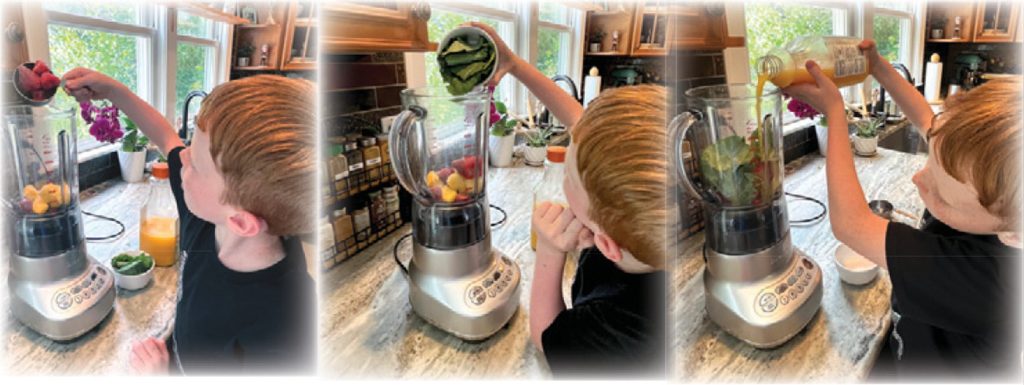
Smoothies are an easy and healthy way to get kids involved in the kitchen. Photos: Meghan Watts
Kids are willing to try things their peers are trying. Therefore, learning to cook in a classroom setting rather than one-on-one can encourage kids to get out of their culinary comfort zone.
Additionally, most children seem to love the act of cooking even if they aren’t enthusiastic about the end product. Practicing knife skills such as chopping, dicing, and mincing is among the top tasks in which kids usually want to participate. This provides a great opportunity to allow them to feel more mature and proud of themselves for being trusted with jobs they probably only see adults do.
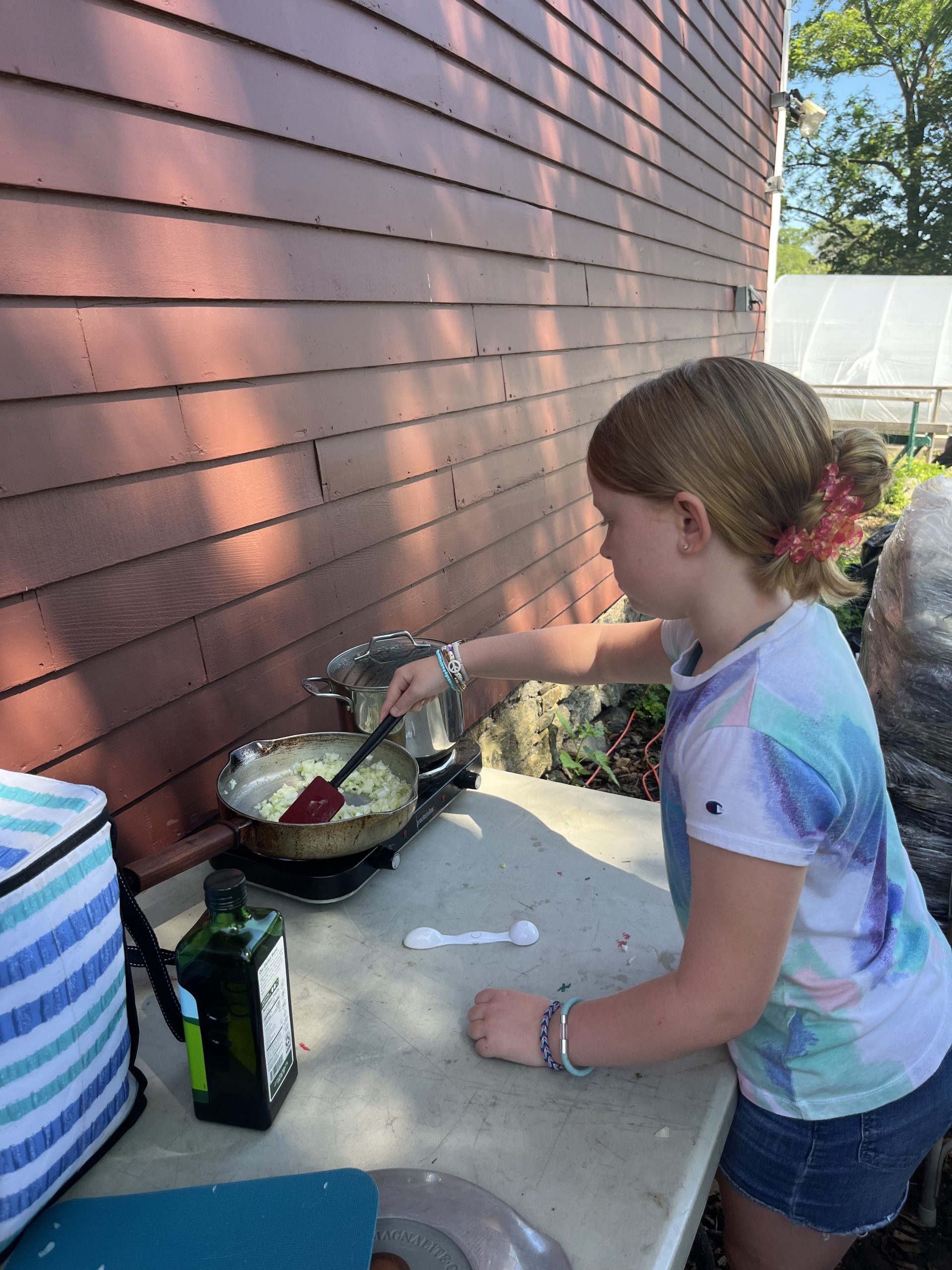
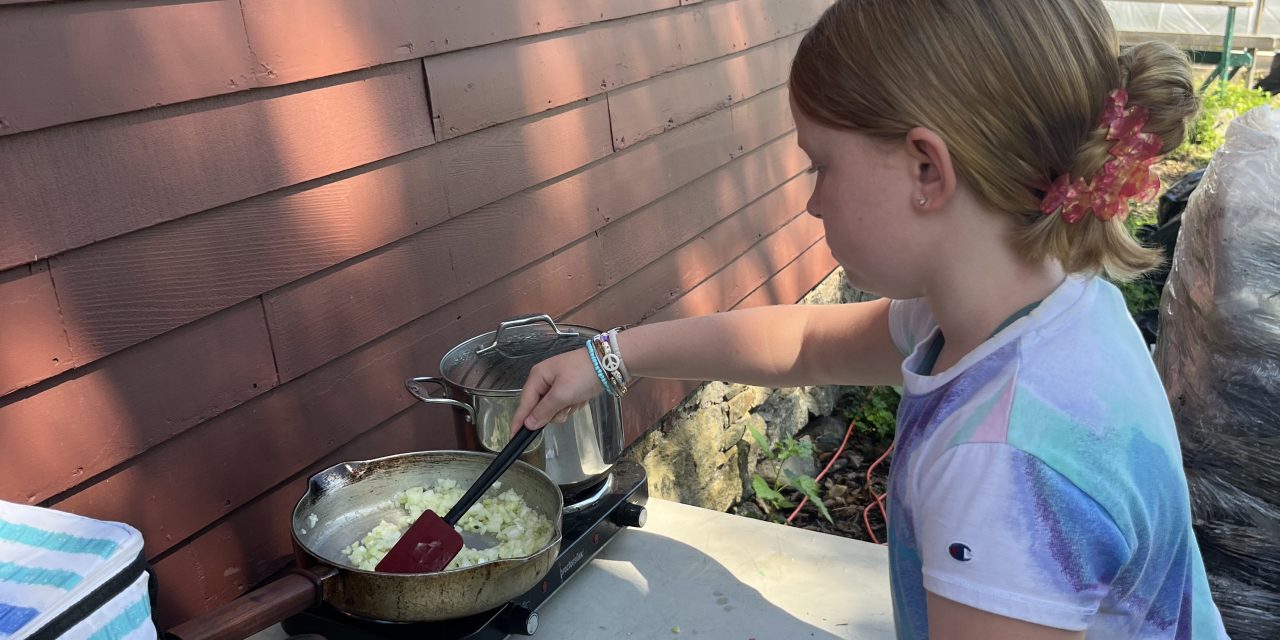
A student cooks risotto during Holly Hill Farm’s “Cooking and Creativity” summer program.
The learning goes both ways: I have learned that kids are capable of being trusted in the kitchen (with appropriate supervision, obviously) because they are equally as concerned with cutting or burning themselves as we are. Therefore, they typically take feedback seriously and generally exercise caution when using kitchen equipment. Continued trust from adults can develop both confidence and a sense of responsibility, thus ensuring kitchen safety when they ultimately start cooking by themselves at the appropriate age.
The most surprising observation, and pleasantly so, is how much kids seem to enjoy cooking for others, particularly the adults in their lives. It is not uncommon for students to bring home portions of their meals to parents or make these recipes at home with their families. Kids possess the innate knowledge that food is more than just sustenance: it brings people together and creates joy.
Teaching other people’s kids about cooking with fresh ingredients, I’ve developed a desire to get my own children cooking at home. My experiences in the classroom taught me to be patient as they made mistakes (and messes), let go of expectations such as perfectly round pancakes, and point out the things they were doing well. Cooking with kids has been as much of a lesson for me as I hope it has been for them.
Here is an easy recipe that kids of any age can help with, and it can be adjusted to please a variety of taste buds. If you want to have your kids practice knife skills, have them chop fruits and vegetables rather than buying pre-cut. There are many videos available on YouTube that review knife safety skills for children, which is information we always review in class before learning to use a knife.
Photos and Words by Meghan Watts: a Certified Integrative Nutrition Health Coach and Outdoor Educator at Holly Hill Farm in Cohasset, Meghan teaches classes on healthy cooking both on-farm and at local schools.
Originally published in the Summer 2026 print edition of Edible Southeastern Massachusetts.
👉 Read the entire Digital Edition: View our interactive flipbook here.
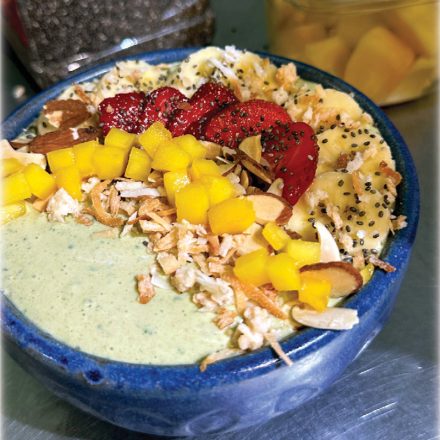
Tropical Smoothie Bowl
Ingredients
- 1 cup mixed fresh strawberries, mango and pineapple (cut into chunks)
- ½ banana sliced
- 1 small kale leaf tough ribs removed
- ¼ avocado
- 1 inch piece fresh ginger, peeled or ½ teaspoon ground
- ½ teaspoon ground cinnamon
- 1 cup low fat yogurt or milk add more if needed (regular or plant-based)