
Fermentation is simply microbes doing what microbes do best: turning sugar into acids, alcohol, and bubbles. For thousands of years, it felt like alchemy—until science revealed the yeast and bacteria behind the magic.
by Rose Forbes, P.E.
What do cheese, carbon dioxide gas, and the hepatitis b vaccine have in common? All are products of fermentation, as are numerous other foods and drinks (yogurt, sauerkraut, beer, kombucha, etc.), pharmaceuticals (antibiotics, other vaccines, vitamins, enzymes), biofuels is for (bioethanol, biodiesel), and industrial chemicals (acetic acid, ethanol, acetone). Since this piece eSEMA, we will focus on the science of food and drink fermentation.
Basic Definition
Fermentation is a metabolic process that converts carbohydrates to organic acids, gases, or alcohol. It is primarily an anaerobic process (without oxygen) but can also be aerobic (with oxygen).
A Brief History of Fermentation
In the 1950s, geochemist Clair Cameron Patterson and his colleagues determined the Earth to be approximately 4.5 billion years old. Bacteria, identified through chemical signatures in rocks, appeared around 3.7 billion years ago, and yeast-like organisms appeared about 1 to 2 billion years ago. Fermentation would have occurred spontaneously in the right conditions with these microbes, but there’s no way to know when the first ferment actually happened. Certainly, our primate ancestors are known to have enjoyed fermenting fruits (for nutrition, of course!), which formed the basis of our evolutionary fondness for alcoholic beverages, an idea known as the “Drunken Monkey Hypothesis.”
One of the oldest references to human involvement with fermentation is from 11,000 BCE (before current era) in Israel, where residues on stone mortars in Raqefet Cave suggested a grain-based fermented gruel. In Sweden (around 7200 BCE), fish were layered in pine bark and wrapped in animal skins to ferment, thus preserving food for the winter. Fermented rice and honey beverages were made in China starting around 7000 BCE, and by 4000 BCE, Egyptians were fermenting grains for bread and brewing wine and beer. Fermentation was used to preserve food and provide interesting flavors long before the health benefits were understood. (The health benefits of fermented foods are discussed on page 19 in the printed spring edition.)
The Alchemy Becomes the Chemistry (and Microbiology)
For thousands of years, fermentation was a practical art carrying a hint of divinity and without a scientific knowledge base until the 1800s, when Louis Pasteur’s work showed that certain microorganisms (i.e., yeast and bacteria) cause fermentation. Pasteur linked specific bacteria (like lactic acid bacteria) to spoilage and fermentation and defined fermentation as “life without air,” which would later be termed “anaerobic.”
Merci, Louis Pasteur!

Science of Fermentation
Types of Fermentation
The three main types of food fermentation discussed here are:
(1) alcohol (ethanol)
(2) acetic acid
(3) lactic acid
Other types of fermentation include alkali, butyric acid, and propionic acid.
Just The Yeast—Alcohol/Ethanol Fermentation
In alcohol/ethanol fermentation, yeast (commonly Saccharomyces cerevisiae) converts glucose (sugar) to pyruvate in a process called glycolysis under anaerobic conditions. Yeast do this to obtain energy from adenosine triphosphate (ATP) for cellular activities. NADH (nicotinamide adenine dinucleotide with a hydrogen atom) is also produced, which is an electron carrier needed to continue fermentation.
A simplified explanation is that yeast eats carbs for energy and eliminates waste in the form of carbon dioxide gas and ethanol liquid. As the sugar runs out and the alcohol concentration increases, the fermentation process slows and eventually stops.
To produce beer, the sugar comes from grains such as wheat, barley, oats, etc. In wine, the sugar is from fruit, usually grapes, but it can be any fruit or even flowers (think dandelion wine). Other yeasts may be involved, especially with wild fermentation, but the majority are Saccharomyces species.
Although yeasts are the star actors in alcohol fermentation, bacteria can also play a role (for example, making a sour beer through the addition of Lactobacillus species).
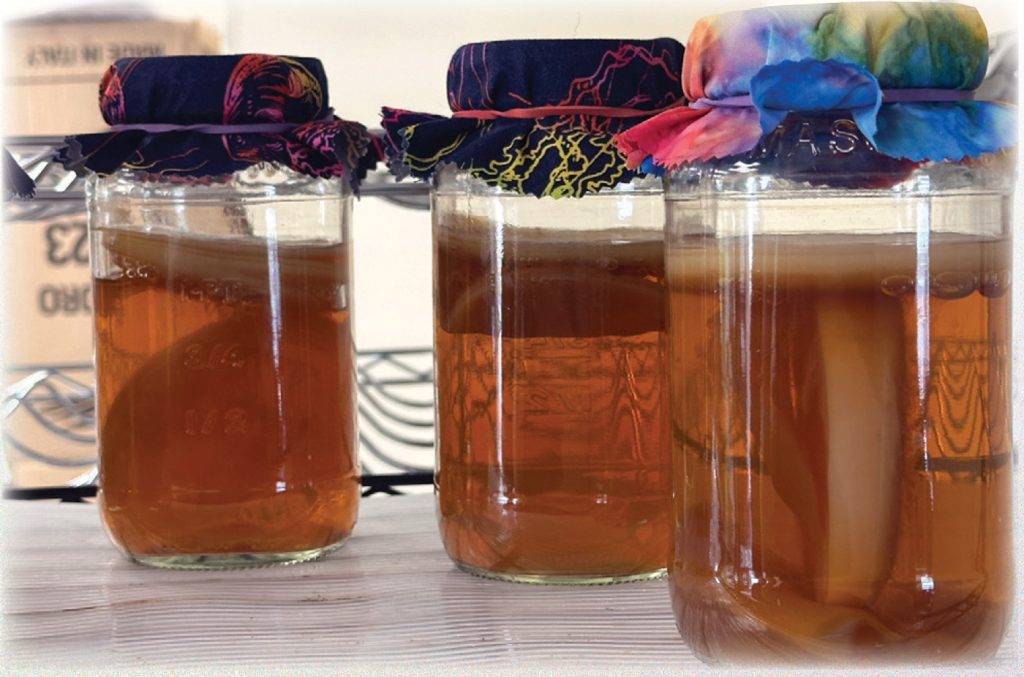
Jars of Kombucha starter with SCOBY.
Let’s Invite the Bacteria Also—Acetic Acid Fermentation
Sometimes it is necessary to have both yeast and bacteria involved in the fermentation process, as in the case where a SCOBY (symbiotic culture of bacteria and yeast) is needed for brewing kombucha or jun. Yeast can include several different species, such as Schizosaccharomyces, Brettanomyces Bruxellenis, Saccharomyces Cerevisiae, and Zygosaccharomyces. The primary bacteria involved in kombucha and jun fermentation are Acetobacter and Gluconobacter, both of which are obligate aerobes, meaning they require oxygen to carry out fermentation. The yeast converts the sugar (or honey in jun) to alcohol, and then bacteria convert the alcohol to acetic acid (aka vinegar) and gluconic acid, with carbon dioxide produced along the way. As a metabolic byproduct, these bacteria excrete cellulose fibers that form a biofilm, or pellicle, which floats on the surface of the liquid.
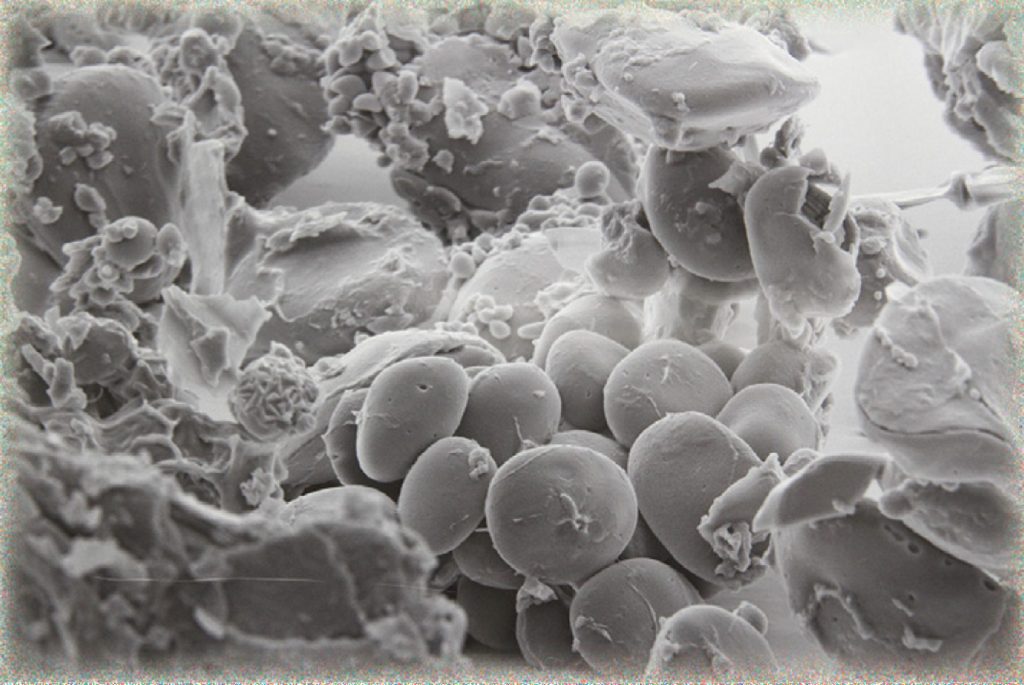
30 micrometer image of bacteria and yeast with an electron microscope.
Just the Bacteria—Lactic Acid Fermentation
In lactic acid fermentation, the bacteria are the stars of the show, and, while not needed, yeast might play a supporting role or perhaps a walk-on cameo. In this type of fermentation, lactic acid bacteria (LAB) convert the carbs into lactic acid via glycolysis (versus the abovementioned ethanol), which gives the food a tangy taste (as with yogurt and sauerkraut). There are several different types of LAB species such as Lactobacillus, Leuconostoc, and Streptococcus. LAB are facultative anaerobes (meaning that they prefer no oxygen but can tolerate low concentrations) that can live at low pH and are salt-tolerant. The use of salt in food ferments inhibits spoilage microbes.
There are two types of lactic acid fermentation, homofermentative and heterofermentative. In homofermentative fermentation, bacteria convert glucose to just lactic acid. However, in heterofermentative fermentation, bacteria also convert glucose to ethanol and carbon dioxide in addition to lactic acid. The production of lactic acid lowers the pH, which suppresses pathogens and helps preserve food.
Yeasts are often present on vegetables used in lactic acid ferments and become part of the fermentation process. Beneficial wild yeasts contribute to interesting flavors, while surface-growing Kahm yeast (a harmless thin white film) can cause off-flavors. The key to preventing Kahm yeast growth is to keep vegetables submerged below the brine, use proper salt concentrations, and minimize oxygen in the ferment.
The following table summarizes the main types of food fermentation:
| Fermentation Type | Primary Micro-organisms | Metabolites | Food |
| Alcohol | Yeasts (i.e. Saccharomyces) | Ethanol Carbon Dioxide | Bread, beer, wine, cider, mead |
| Acetic Acid | Acetobacter Gluconobacte | Acetic Acid | Kombucha, jun, vinegar |
| Lactic Acid—Homofermentative | Lactobacillus Streptococcus | Lactic Acid | Yogurt, cheese, pickles, sourdough |
| Lactic Acid—Heterofermentative | Leuconostoc Lactobacillus Pediococcus | Lactic Acid Carbon Dioxide Ethanol | Sauerkraut, kimchi, other fermented veggies |
Yeast and bacteria have been around for millions of years, and humans have been using them in ferments for thousands of years. These microorganisms are responsible for fermentation, whereby they metabolize carbohydrates into alcohols, acids, and gases, creating tasty foods. Fermentation also creates an environment that inhibits the growth of spoilage bacteria and pathogens, making it a popular technique for preserving food.
In summary, and while channeling the immortal words of Blue Öyster Cult, take my hand (and a jar of kimchi), and don’t fear the ferments.
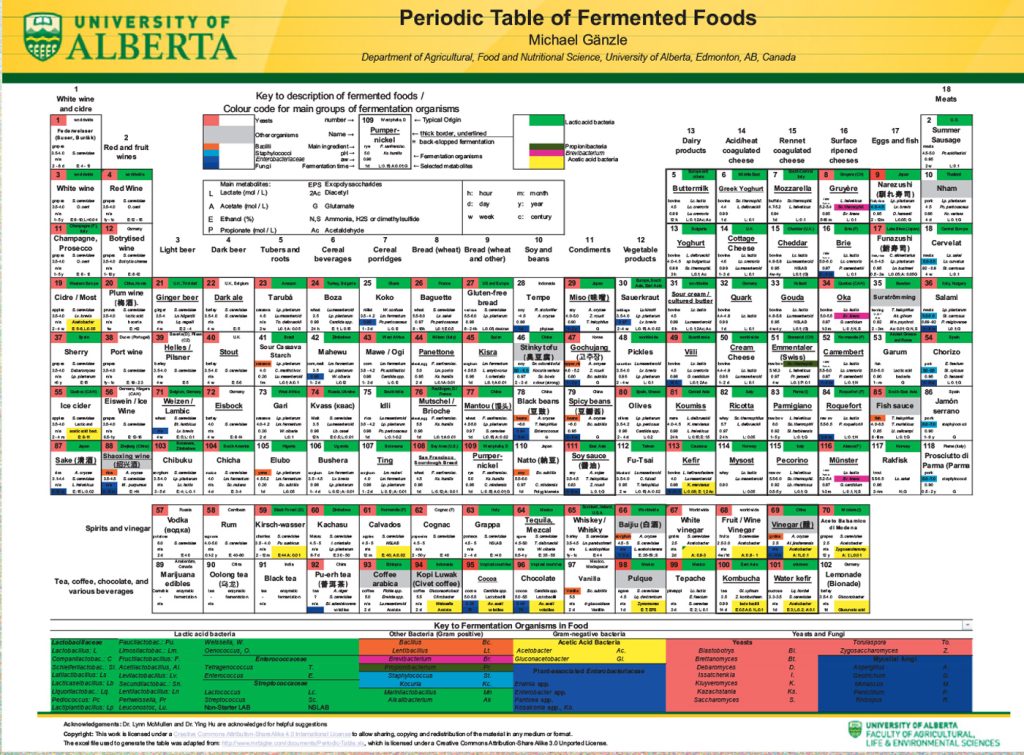
Chart of Periodic Table of Fermented Foods by Michael Ginzle