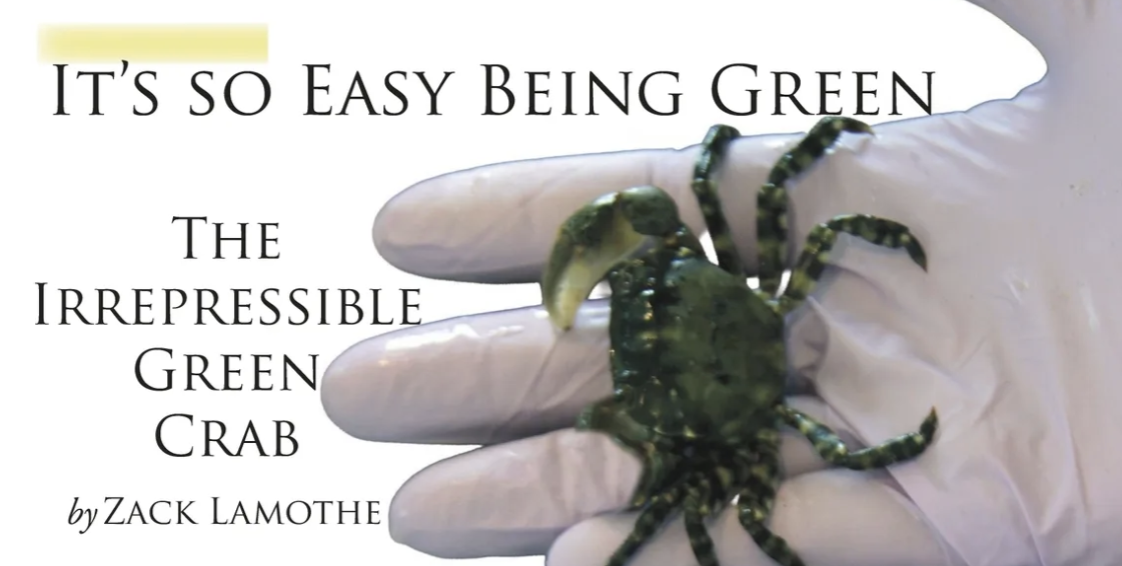

When we think of edible shellfish in New England, it’s lobsters, oysters, and clams that often come to mind. Prepared in various ways, these are delicious on their own or as part of a larger meal. Crab, though, does not appear on local menus as often. When it does, it tends not to have been caught locally. However, there’s a potential solution for that: our local waters are teeming with an invasive, edible crustacean, the green crab.
I only recently learned about the green crab, so I figured that it was a new arrival to our region. Boy, was I wrong! The crabs, originally found in European waters, were introduced to the East Coast in the early 1800s. In the 1990s, a second batch of green crabs arrived via Scandinavian tanker ships bound for Nova Scotia. It seems that regional fishermen have been dealing with the impact of the green crab for generations.
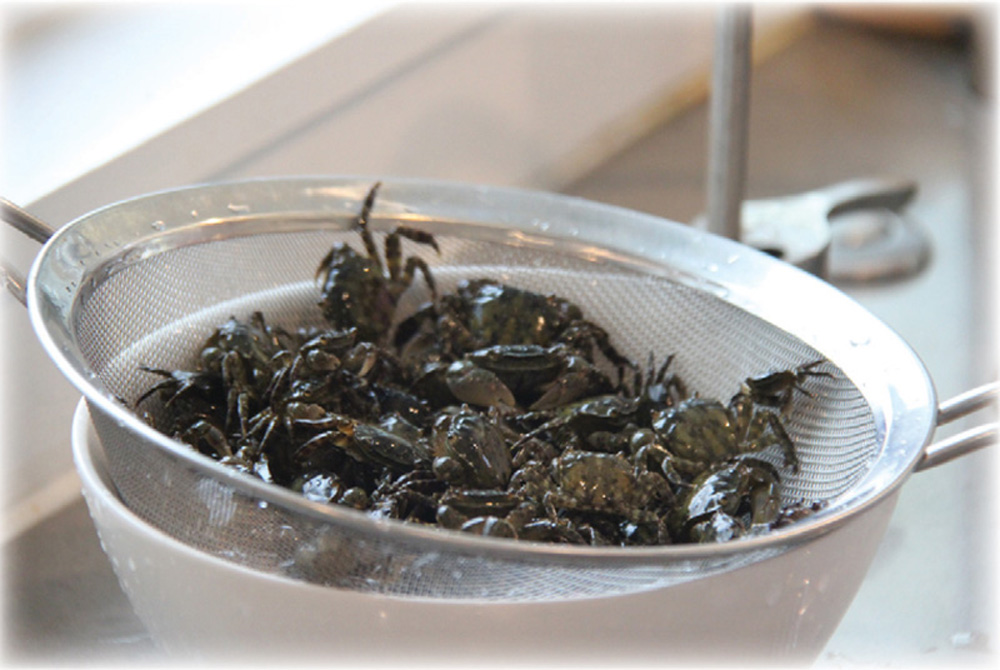
These hungry buggers are known to chomp down on 40 to 50 of our favorite edible mollusks a day.
Danger, Will Robinson!
What makes the green crab such a threat is its nasty, bullish nature. Not only does it prey on our local oysters and clams, but it also consumes larger crustaceans and fish in their juvenile state. The green crab is resistant to many of the natural predators of other crab species. These hungry buggers are known to chomp down on 40 to 50 of our favorite edible mollusks a day, and they compete with our beloved lobsters for resources. They also wreak havoc on coastal seagrass. For these reasons, the green crab has forced changes in shellfish cultivation.
Remediation efforts have been discussed, but none is a perfect solution. Dr. Gabriela Bradt, a fisheries extension specialist at the University of New Hampshire, is a green crab expert, heading the NH Green Crab Project. The Project looks to understand the crab’s molting habits to help create a market for the edible soft-shell green crab. Regarding the current status of green crabs, Dr. Bradt poses the question, “There are no trapping or removal initiatives that have made any dents—primarily because there is no money [to implement them], and what do you do with all the biomass?”
Carolyn Tepolt, a scientist at Woods Hole Oceanographic Institute, is another green crab expert. Her thoughts regarding trapping echo Dr. Bradt’s, and she further explains what makes trapping so difficult. “Trapping may help temporarily decrease adult crab populations, but crab larvae travel,” meaning that although they hatch in one area of the ocean, they can mature in another.
One Tasty Solution
Although trapping and eradication efforts have proved difficult, one delicious way to help with the green crab problem is to eat them! Tepolt steams the crabs and says they “taste great” and have a sweetness to them, especially the claw meat. Their small size does not provide much meat, but their sweet taste enriches stocks and broths, and they can be steamed, fried, or served as a complement to a larger dish. A newly molted crab has been a Venetian delicacy for years in a dish known as moeche. Soft-shell green crabs are deep-fried and eaten whole. Yum!
Locally, green crabs have been turning up on menus, at fish markets, and even at a New England distillery! Chefs in restaurants on the South Shore and Boston are coming up with creative ways to utilize these invasive pests. In Duxbury, the Winsor House serves them steamed in white wine with a jalapeño sofrito and a baguette. At Branch Line in Watertown, the green crab is used in a cioppino, while Cambridge’s Pagu has featured green crab in a croqueta ball. The venerable Boston fishmonger Wulf’s Fish sells the crab whole.
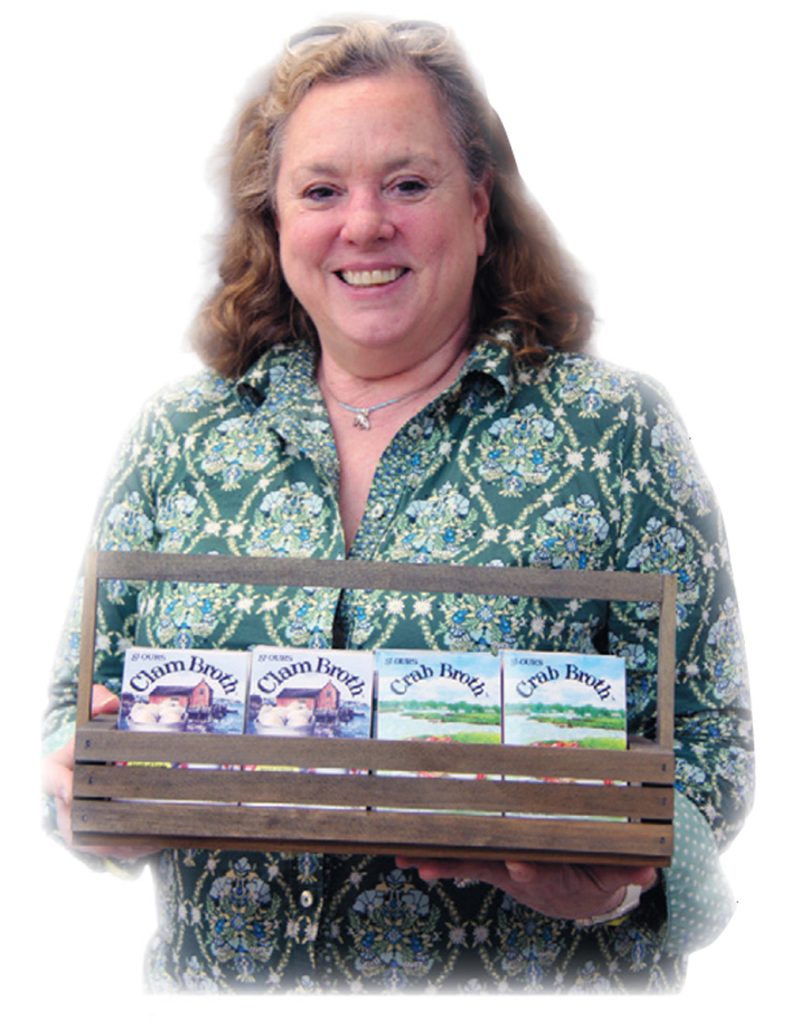
Sharon St. Ours proudly displays her products.
The Green Crab Cookbook is a great resource for ideas. The book, written by Mary Parks, a founder of the Green Crab R&D Project and executive director of Greencrab.org, and Thanh Thái, who runs the blog Green Crab Café, features multiple ways to cook the green crab. For a selection of free recipes from the Project, check out their website at www.GreenCrab.org/recipes. The recipes range from the traditional, such as green crab stock and fried green crab, to the wild, such as the Hot and Crabby Martini or the Loaded Baked Potato with Green Crab Gravy.
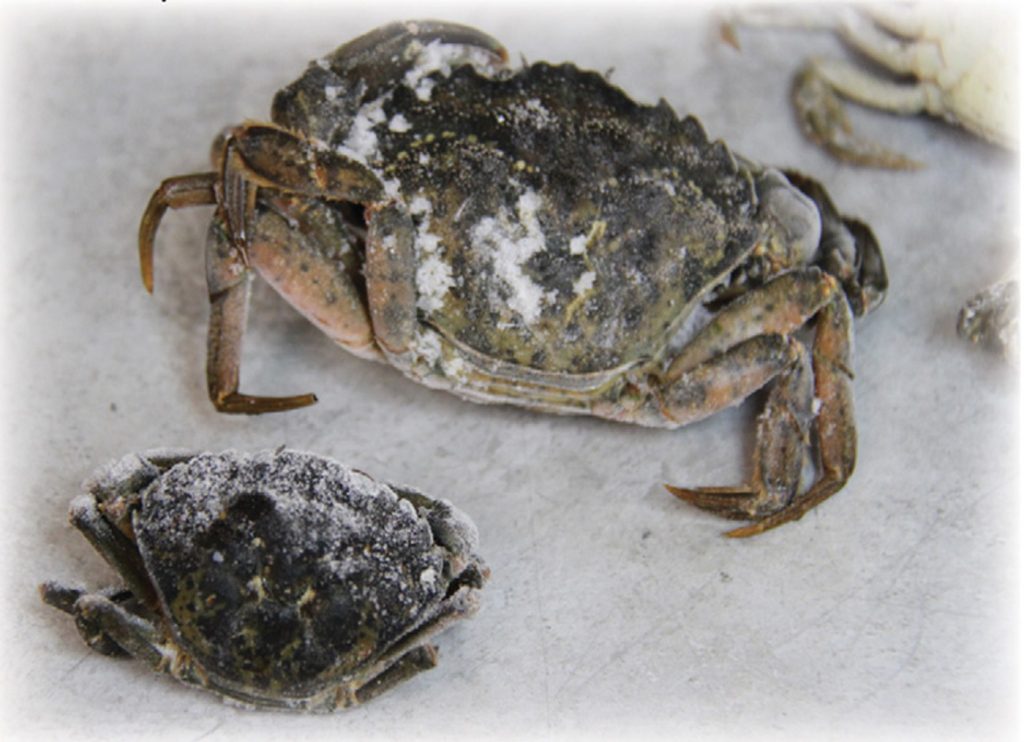
The green crab’s threat is its nasty, bullish nature at any size.
Local broth company St. Ours & Co. has introduced a green crab broth into their repertoire. Vice President of Operations Sharon St. Ours explains how she became aware of the invasive green crab due to a school project by a neighbor of her father-in-law, who lives on the North River. She then learned more about the crab during a presentation from Roger Warner, another founder of the Green Crab R&D Project, at the South Shore Science Center. Sharon felt there was a market for them that St. Ours could help to fill.
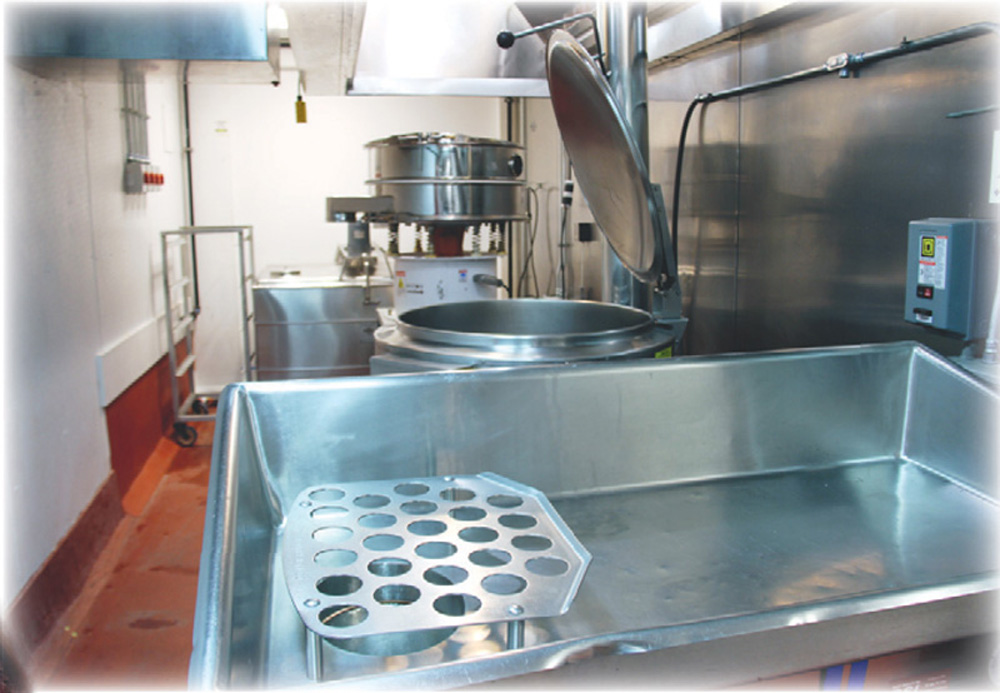
Sharon St. Ours proudly produces dehydrated crab broth in Pembroke.
St. Ours now makes a green crab broth powder, for which they slow-simmer pounds of fresh green crab. Sharon describes the broth-making process as trial and error. “I’m not adding any herbs, spices, or aromatics, to make it as versatile as possible, so I had to make the crab flavor shine.” St. Ours uses a similar dehydration process as with their clam broth. She adds that the most difficult aspect was dealing with the live crabs. “Cooking them fresh has many challenges. If left in a cooler without food for long periods, they will cannibalize each other. As soon as they die, they emit a black liquid and their flesh starts to decay, which gives off a sour smell.” Sharon finds the aggressive and finicky nature of the crab to be the single most challenging obstacle in producing the broth.
Sharon proudly claims the crab broth is “really tasty! The green crabs make an excellent broth.” Among the potential uses she mentions for the broth powder are for a “seafood stock, especially a shellfish stock,” in a cioppino, and adding the powder to give more flavor to crab cakes—but the options are endless. The broth powder is currently available commercially and may be in stores in the near future.
Going Green—Even More Uses
One of the most innovative approaches to the crab is from Tamworth Distilling. They collaborated with Dr. Bradt and her NH Green Crab Project. The distillery uses thousands of green crabs culled from Seabrook, New Hampshire, to create its Crab Trapper whiskey. It has a bourbon base, mixed with an assortment of spices. Distillery owner Steven Grasse likens it to a “briny and better Fireball.”
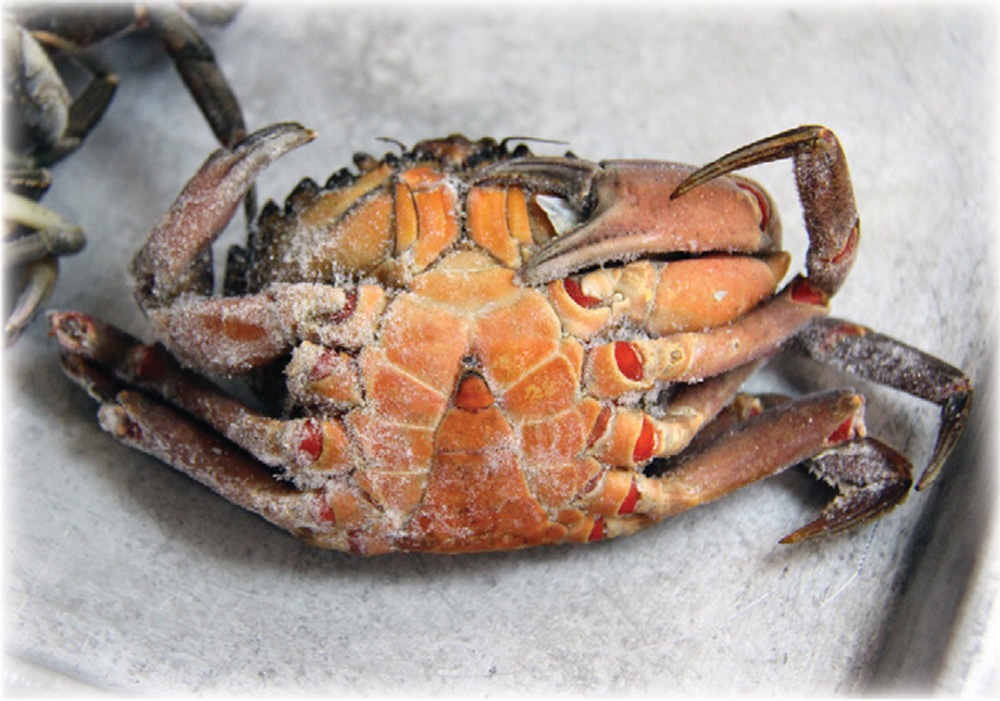
Frozen green crab (underside) — edible, invasive, and ready for the kettle.
In addition to food for humans, other uses for green crabs include fishing bait, fertilizer, and animal feed. Roger Warner has yet another idea regarding what to do with the crab. “I personally don’t believe that culinary uses, even if maxed out, can put a dent in the green crab population.” A solution Warner does believe in is extracting valuable chemicals from the crab shells for use in the pharmaceutical industry. Carolyn Tepolt explains the concept of functional eradication, an increasingly common approach that can be useful in places where crabs are well-established and a nuisance. “Functional eradication is an attempt to bring down numbers to the point where they have less impact, where ‘true’ eradication isn’t possible.” Long, cold winters will keep the green crab population down, but in our region, a frigid winter has not occurred for years.
If you are combing New England beaches this summer and see a crab, here is how to know it is a green crab. Foremost—and quite oddly—green crabs are not necessarily green. They are roughly 2.5 to 4 inches across, with their most defining feature being five spines on each side of the shell, just past the eyes.
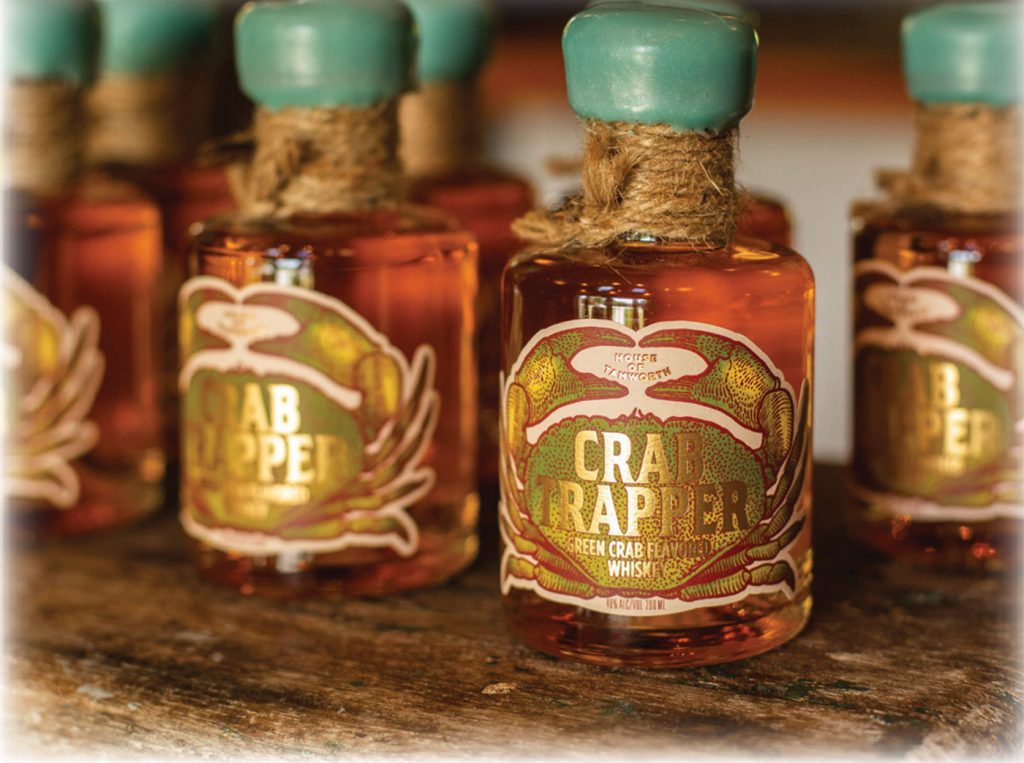
Crab Trapper whiskey is made in Seabrook, New Hampshire.
Other non-indigenous crabs jockeying for position in New England include the Asian shore crab and the blue crab. The shore crab also latched onto tankers as wee larvae, this time from Asia in the 1980s. Although they compete for space, the Asian shore crab and the green crab are dissimilar in their habits. The Asian shore crab is often found under rocks at the seashore. Flip one over and see them scatter. They do not seem to mind a lack of personal space as they crowd together. Green crabs are not as tolerant, and watch out if a green crab sees another that’s molting or is much smaller—it’s dinner time! The blue crab is native to waters below Cape Cod but have made their way north of the Cape due to rising water temperatures.
Whether at the beach or at a restaurant, you may spot green crabs locally this summer. If you’re looking for a tasty way to help with the green crab problem, try eating (or drinking) them!
Zachary Lamothe is happy to help remedy the green crab problem through any culinary means necessary, even if his kids may sometimes find him crabby.
Originally published Summer 2025