Before even reaching middle school, most children are told they can be and do anything they want when they grow up. Astronaut, pop star, president of the United States—it’s all within reach. However, this messaging changes quickly. “Go to college and get a good, stable job. Work in finance. Be a nurse; you’ll never be without work.” Most of us listen to this advice and end up with jobs that aren’t quite the dream we envisioned in our youth. Stephen Cole, executive director of the Plymouth Foundation, hopes to change that.
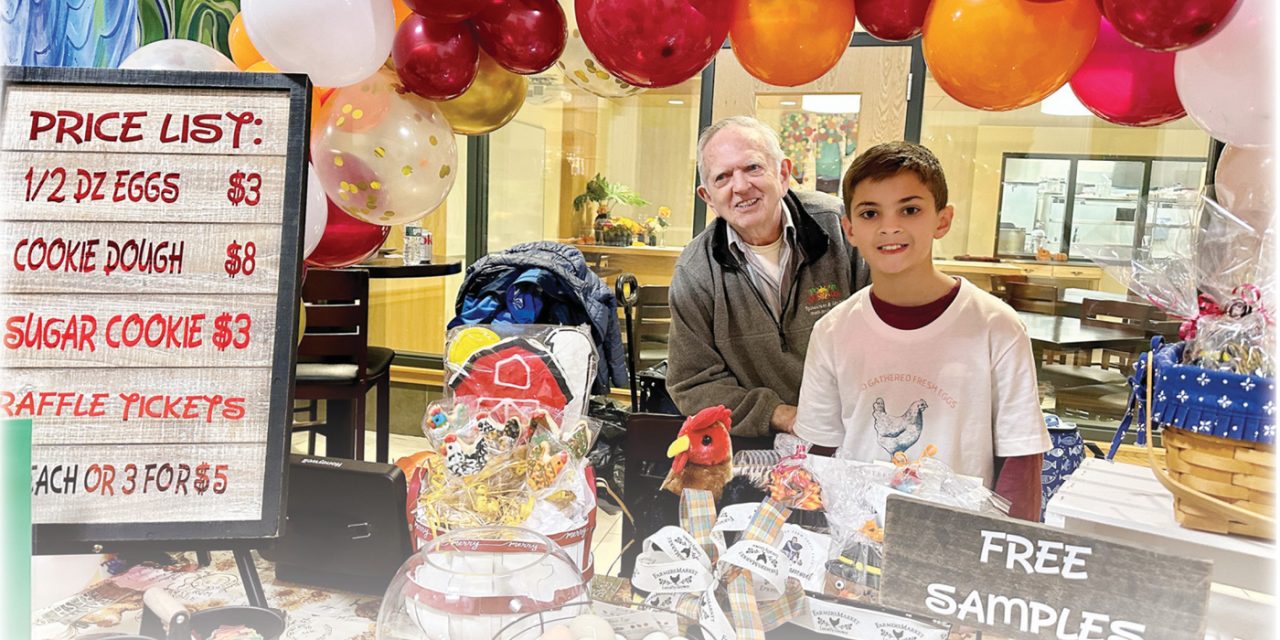
Now in its fifth year, the Children’s Business Fair in Plymouth has been promoting the development of young entrepreneurs since 2021. All fifth-grade students are given the opportunity to participate in this event by creating a business and offering their products or services to the community at what has become an annual fair. About 60 percent of fifth grade students in Plymouth choose to take part in the fair each March, and more children are interested as the years go by. In fact, the fair was held initially at West Elementary School, then moved to Plymouth North High School. The event outgrew both spaces, so last year the business fair became a two-night event. The first evening is held at Plymouth North High School and the second at Plymouth South High School.
“If we do it in fifth grade, we won’t be scared of it as adults. You’ve dealt with the fear of the monster under the bed and will be more willing to take risks and start a business.”
– Stephen Cole, Executive Director of the Plymouth Foundation
Entrepreneurial Endeavors
The idea for the fair was born during the pandemic. The Plymouth Foundation was rather busy at the time, envisioning programs that might bolster businesses and workforce development as the world slowly opened back up. The organization was looking for ways to bring people back together, all while helping support local and small businesses. Getting involved with schoolchildren was a no-brainer.
“If we do it in fifth grade, we won’t be scared of it as adults,” Cole told me, referencing entrepreneurship. “You’ve dealt with the fear of the monster under the bed and will be more willing to take risks and start a business.”
Students who decide to participate must produce a business plan, which is then vetted. If something doesn’t make sense or the financial figures don’t quite add up, students might be encouraged to take another look and figure out how to make sure their business will be successful. Safety is also paramount. If anything in the process appears to be produced, marketed, or sold in a way that could potentially be dangerous, it must be rethought and corrected.
Children are encouraged to come up with their own business, its name, logo, and products they’ll be selling. Figuring out which payment methods they’ll accept and how to do that (like setting up a Venmo account) is another business decision. Students from Plymouth South High School assist with marketing and posters, but aside from that, it is the fifth graders who are the driving force behind these businesses. Parents, teachers, and mentors guide, support, and supervise the entire process. The Plymouth Area Chamber of Commerce pairs the children with a small business owner in the community. At a Mentor Evening, parents can meet their child’s mentor and establish a relationship.
Many students choose to operate food businesses. The Board of Health has standards that the students must understand and adhere to. Learning about ServSafe requirements is very important if you are to operate a restaurant or other food business, so that information is presented to the young food entrepreneurs. Product packaging needs to communicate to consumers that all products were produced in healthy environments that are pet-free and clean.
 Building a Business from A to Z
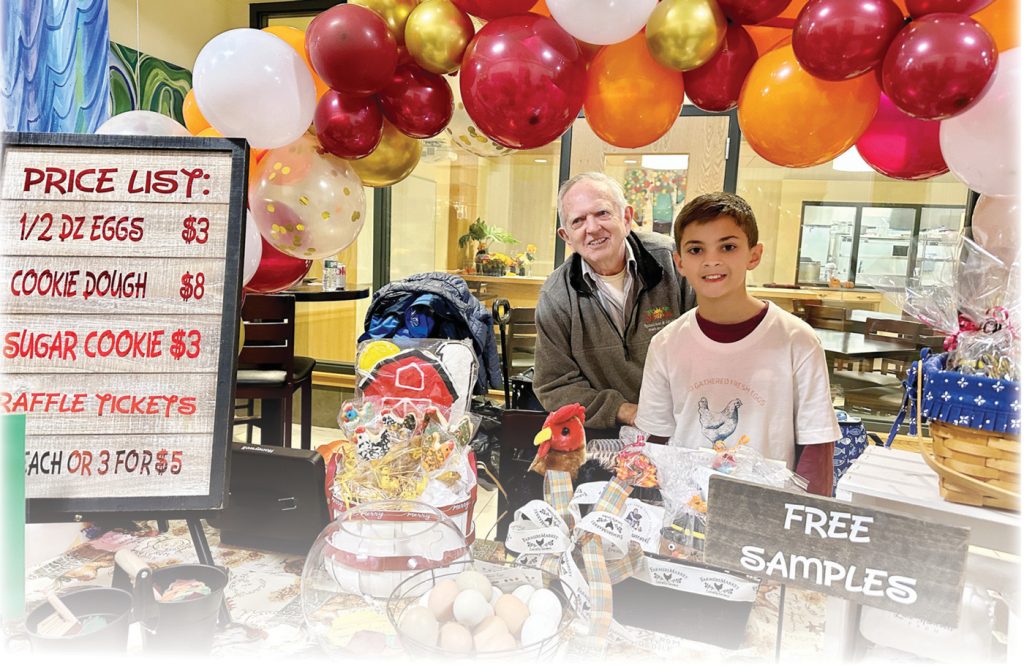
When operating a business, the owner must figure out what it takes to make a profit. Students look at their inputs to determine what it costs to make one item. What should their unit price be to cover their costs and make a profit? It isn’t always simple. One year, there were quite a few students who decided to produce and market versions of the popular play substance known as slime. When the market is over-saturated with slime, what does that mean for the business? How do you convey to the public that your slime is the one to purchase? Is it a lower price? Is there something else to set it apart? These are questions that all these young entrepreneurs must consider (even if they aren’t selling slime). For instance, if someone walks into the Business Fair with $30, how can you encourage them to choose your product?
One student took advantage of the fact that their grandfather had a honeybee farm in Carver. Honey harvested in the spring is often light-colored and mild-flavored, while fall honey is darker and richer. The student was able to educate consumers about different varieties of honey and why color and flavor could vary so dramatically. They walked away with $1,200 at the end of the day!
Another young entrepreneur took oyster shells, cleaned and sanitized them, painted them, and turned what might have become trash (or maybe compost) into beautiful pieces of art. Restaurants that had already shucked and served their oysters were eager to give away the used shells. After some hard work, the painted shells were then sold for $20 each. How cool is it to see the whole cycle of a product—and reduce waste!
In addition to food products, beauty products are also very popular items at the Business Fair. One brave young girl, eager to sell her homemade moisturizers and facial products, went right up to an adult, looked her in the eye, and said “Your skin looks thirsty.” She then showed the woman to her table to demonstrate how her products could rejuvenate her skin. She was confident, and her products spoke for themselves. She had a successful day.
Another student was a maker of organic soaps. At a craft fair, he noticed a vendor selling soap for $7 a bar. He felt that was too expensive and wanted to offer a more reasonably priced soap. He applied for a grant to help cover the input costs, therefore lowering the end product cost. Talk about innovation! The soap-maker was able to source high-quality organic ingredients and offer their product for sale at a price lower than $7.
When given encouragement and opportunity, young people can do creative and innovative things. Unfortunately, children are not often urged to think outside the box and truly shine. Stephen Cole closed our conversation with a quote that I thought summed up the fair perfectly: “Let’s give them the courage and confidence… and the audacity to tell potential customers that their skin looks thirsty.”
Cheers to the makers!
Originally published in the Winter January 2026 print edition of Edible Southeastern Massachusetts.